
Home Assistant Integration
TapHome devices appear in Home Assistant through the TapHome API, using an integration installed via HACS or manually.
Last updated:
TapHome devices get into Home Assistant through the TapHome API: a TapHome integration, installed via HACS or manually, uses this API to control the devices you expose. You need to expose the devices through the TapHome API and obtain the API token of the TapHome Core and the IDs of the devices. After you add these credentials to the Home Assistant configuration, you can control the exposed lighting, switching devices, shading systems and sensors from Home Assistant.
Overview
The TapHome integration enables control of exposed devices through Home Assistant, utilizing the TapHome API for communication.
Supported Device Categories
Lighting Control
- Power switching
- Intensity/brightness adjustment
- Color modification capabilities
Switching Devices
- Electrical sockets
- Digital output controls
Shading Systems
- Position level control
- Slat angle adjustment for blinds
Additional Devices
- Garage door operators
- Temperature and humidity sensors
- TapHome variables
- Motion detectors
- Energy consumption monitors
- Light level sensors
- CO2 detectors
- Wind speed meters
Installation Methods
HACS Installation
Users can install via HACS using the following method:
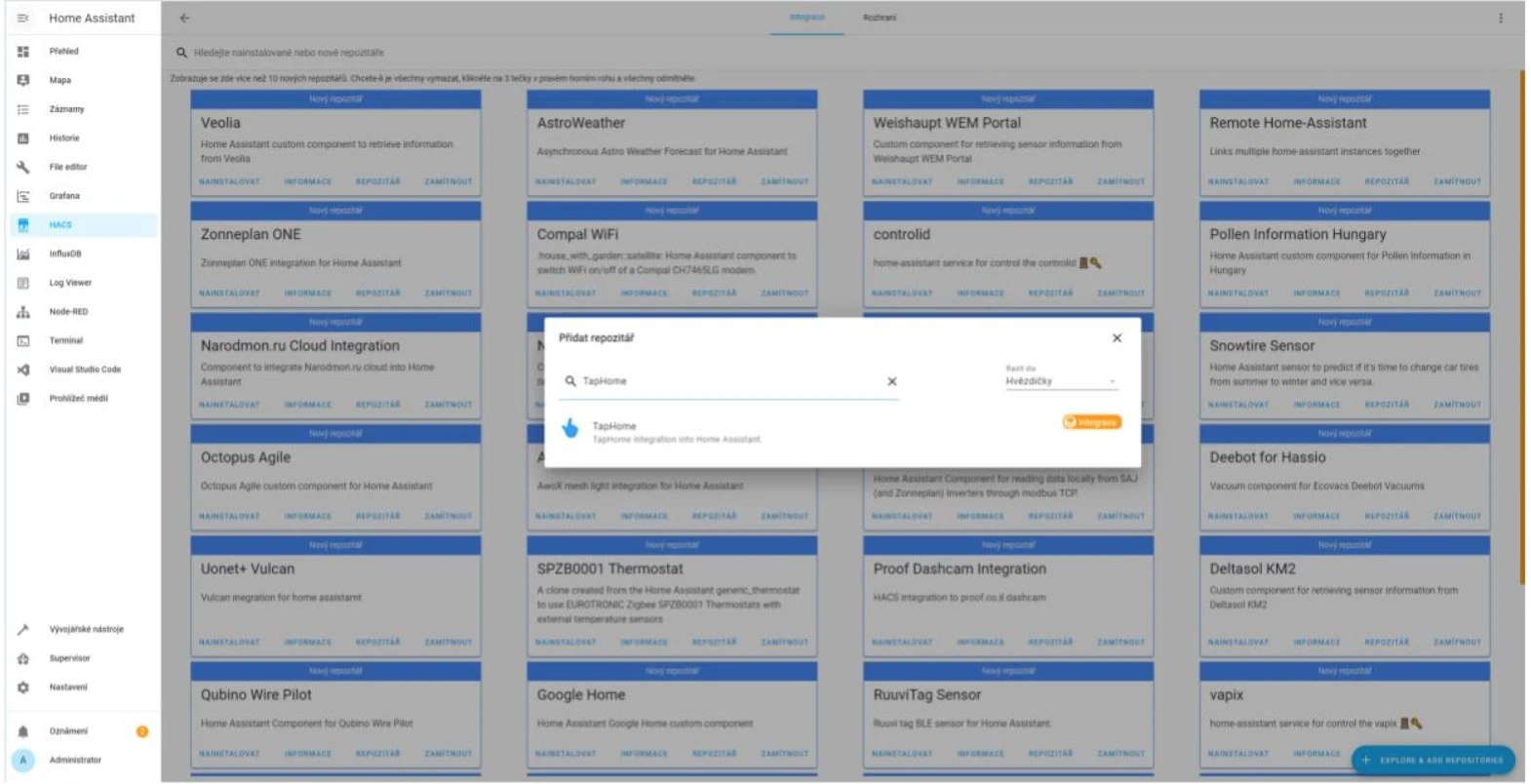
Navigate to “HACS > Integration > Explore & Add Repository > TapHome > Install Repository”
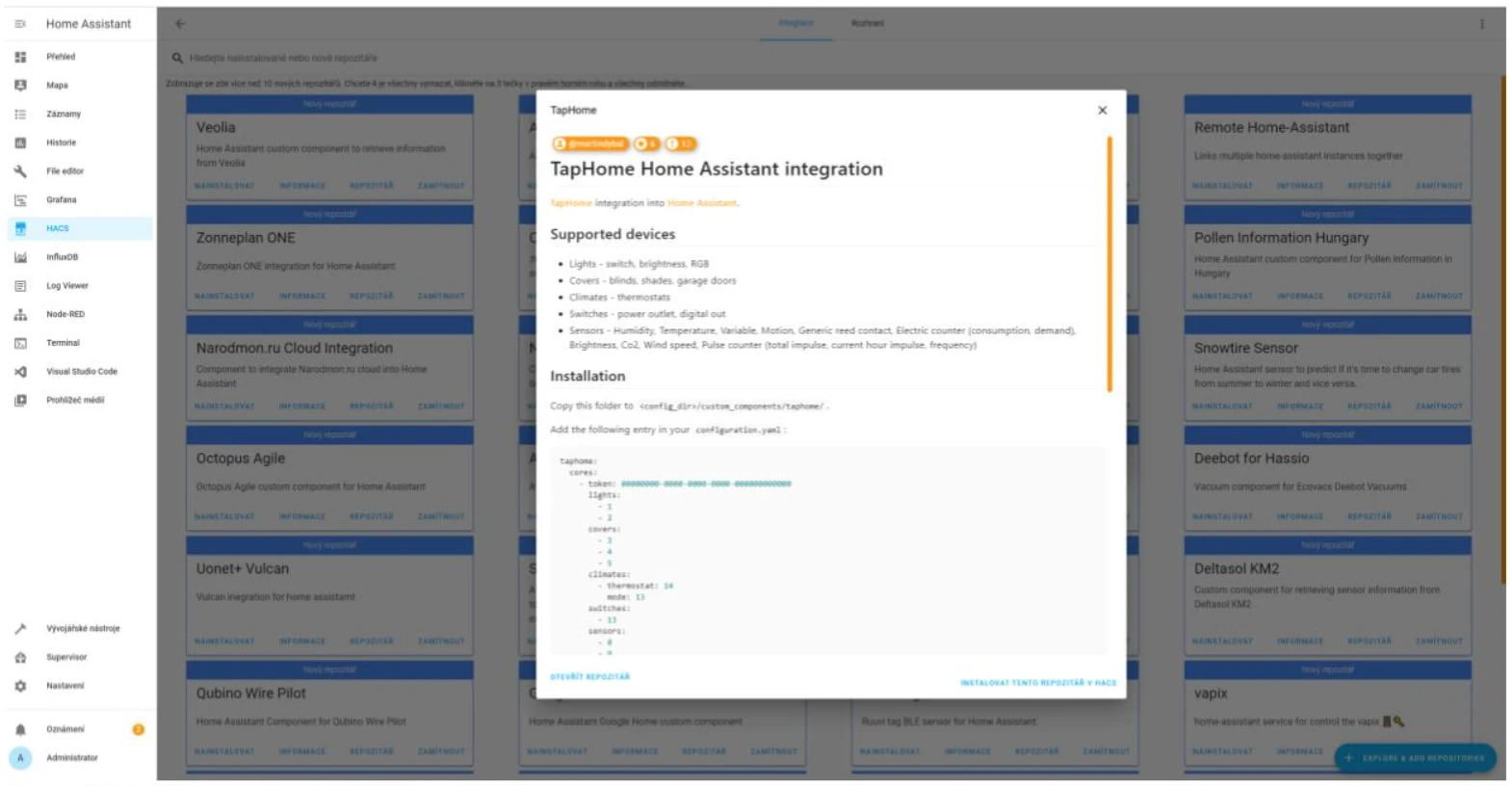
Manual Setup Alternative
Alternatively, you can manually transfer the /custom_components/taphome/ directory contents from the repository to the designated folder location.
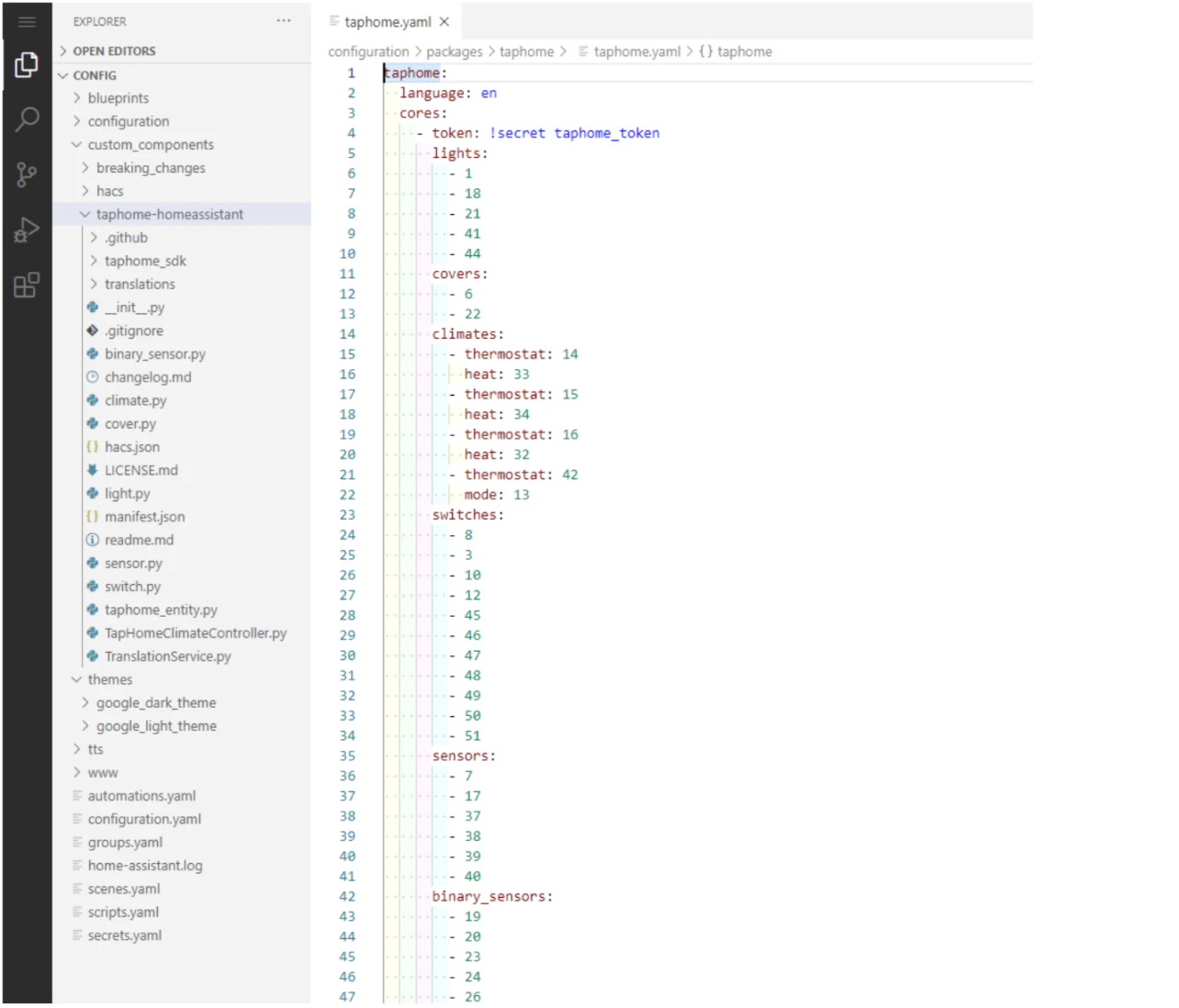
Configuration Requirements
To enable integration, users must:
- Expose devices through TapHome API
- Obtain the API token of the TapHome Core and the IDs of the devices
- Add credentials to Home Assistant configuration settings
For detailed configuration instructions, refer to the project’s wiki documentation.
See also — TapHome API, TapHome to Amazon Alexa.